Introduction
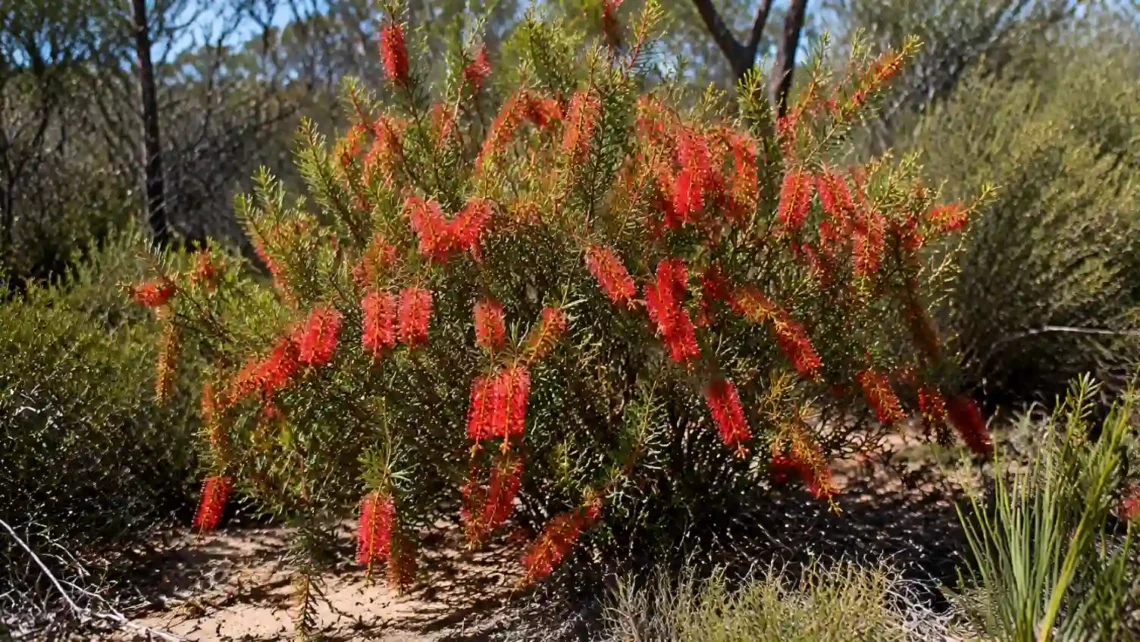
Calothamnus quadrifidus, commonly known as the one-sided bottlebrush, is a hardy shrub native to south-west Western Australia and belongs to the Myrtaceae family. This drought-tolerant species is well known for its unusual flower arrangement, where blooms grow predominantly on one side of the stem. It is widely used in native landscaping due to its resilience, attractive red flowers, and low maintenance requirements. Like many resilient natives featured in the Australian Native Garden Trees guide, this shrub is valued for low-maintenance landscaping in dry climates.
Quick Summary
- Calothamnus quadrifidus is a Western Australian native shrub in the Myrtaceae family
- Common name: one-sided bottlebrush due to asymmetric flower placement
- Typically grows 1.5–3 meters tall with red (rarely yellow) flowers
- Highly drought-tolerant and low-maintenance once established
What Is Calothamnus quadrifidus?
Calothamnus quadrifidus is an Australian native shrub in the Myrtaceae family, closely related to genera such as Beaufortia and Callistemon. The genus name Calothamnus comes from Greek words meaning “beautiful shrub,” referring to its ornamental flowering structure. The species is widely recognized for its distinctive red, claw-like flower clusters. It belongs to a broader group of shrubs often compared in native plant discussions such as Grevillea sericea, which shares similar flowering ecology.
Why It’s Called “One-Sided” Bottlebrush
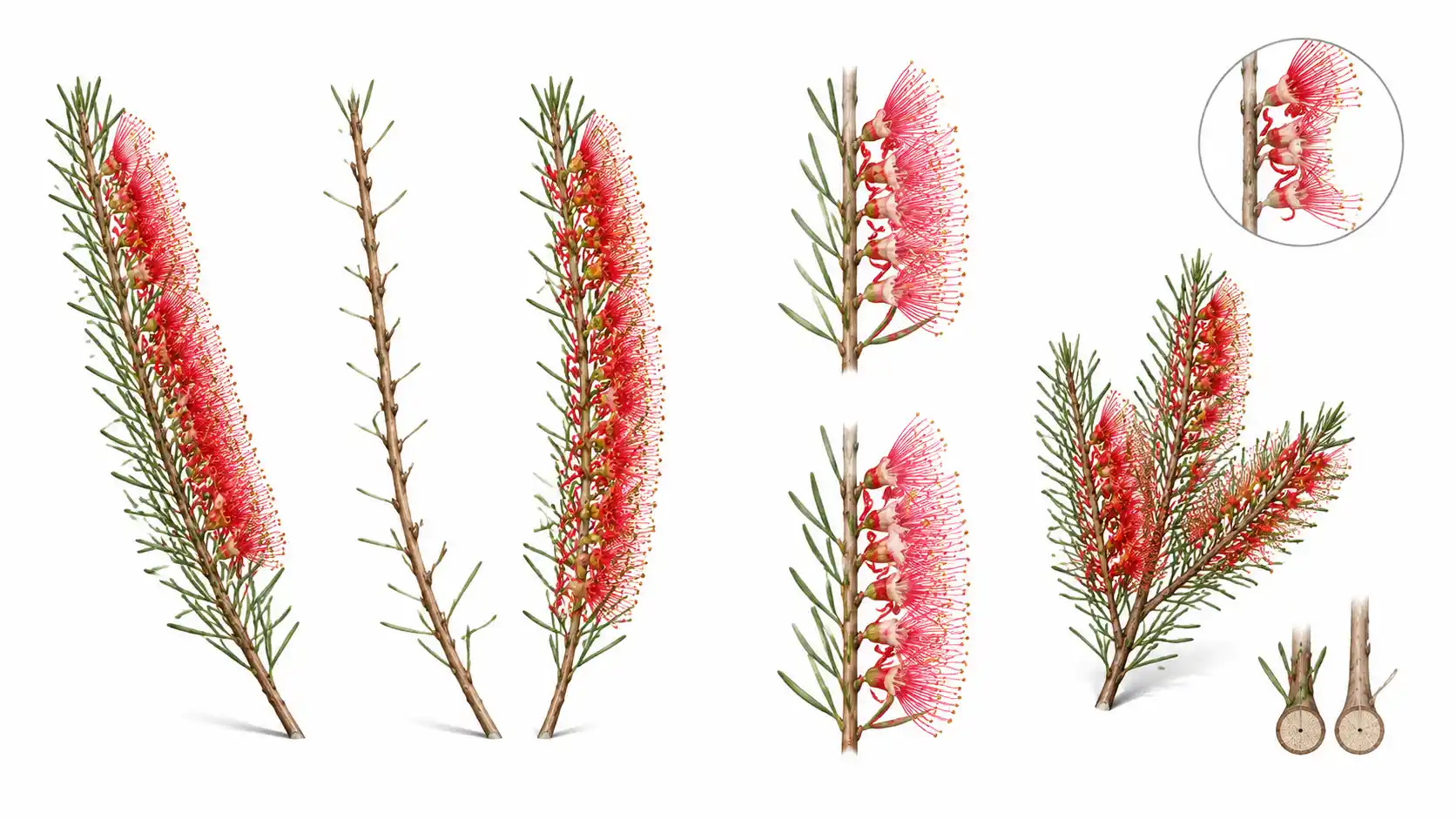
The common name “one-sided bottlebrush” comes from the plant’s unique floral arrangement, where flowers develop along only one side of the stem. This gives the inflorescence a comb-like appearance rather than a cylindrical bottlebrush shape typical of related species.
Native Range and Origin (Australia)
Calothamnus quadrifidus is native to south-west Western Australia, where it grows naturally in sandy soils, coastal plains, and dry shrublands. It is well adapted to nutrient-poor soils and Mediterranean-type climates with dry summers and wet winters.
Identifying Features — Leaves and Flowers
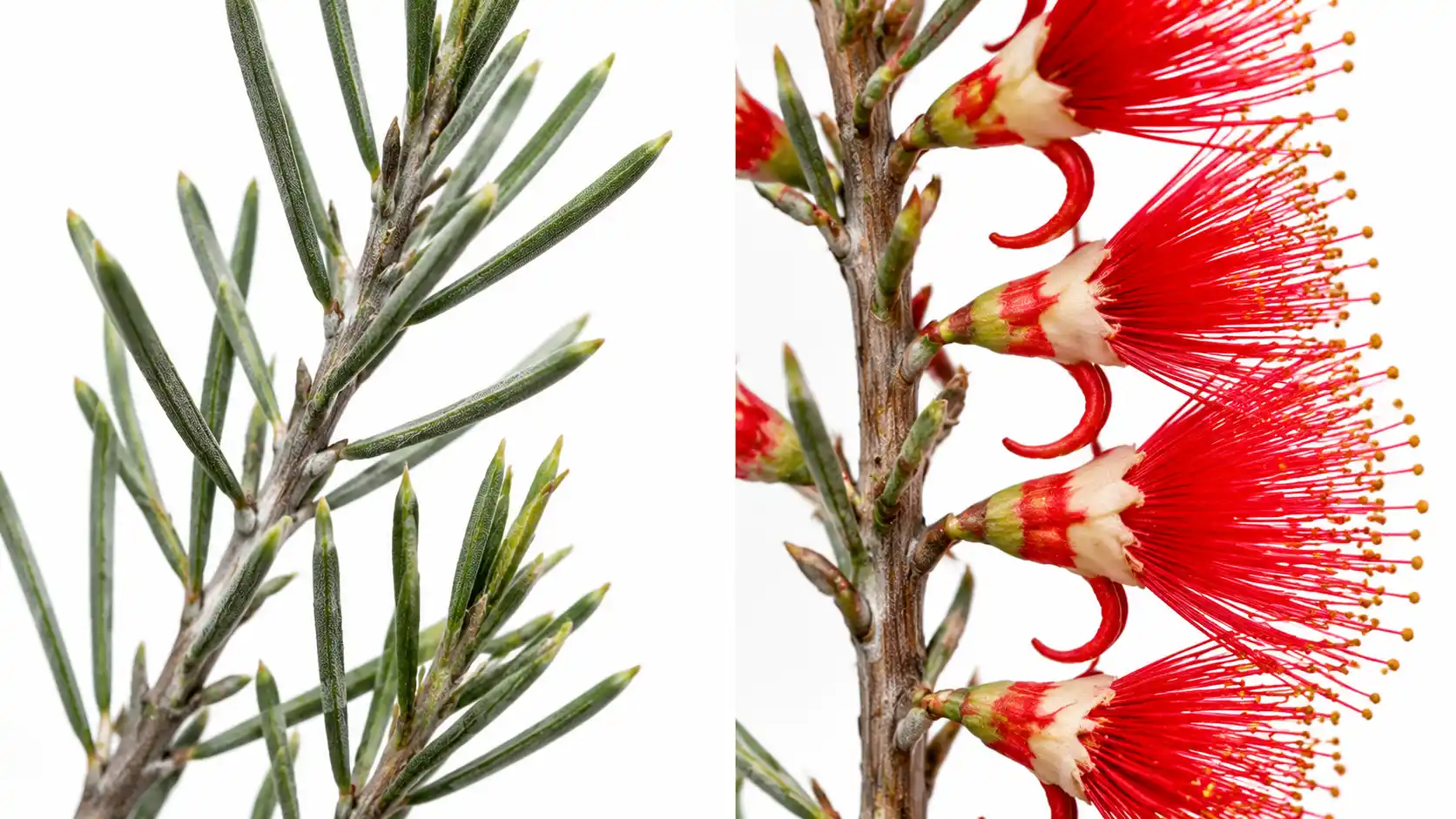
Calothamnus quadrifidus is easily identified by its narrow leaves and distinctive one-sided flower clusters. These features make it a popular choice for native plant identification in Australian flora. Its fine foliage structure is similar in texture to other Australian natives like Hakea sericea, known for its needle-like leaves.
Leaf Shape and Texture
The leaves of Calothamnus quadrifidus are needle-like, slender, and often described as pencil-like in appearance. They are typically grey-green to deep green in color and may have a slightly hairy or soft texture. This adaptation reduces water loss, making the plant highly drought-resistant.
Flower Color and Bloom Pattern
The flowers are bright red and claw-like, forming dense clusters along one side of the stems. In rare forms, yellow-flowered variants also occur, known for their ornamental value in gardens.
Key Identification Traits:
- Needle-like, pencil-shaped leaves
- One-sided flower clusters
- Bright red blooms (occasionally yellow)
- Woody, multi-stemmed shrub structure
Calothamnus quadrifidus Varieties and Forms
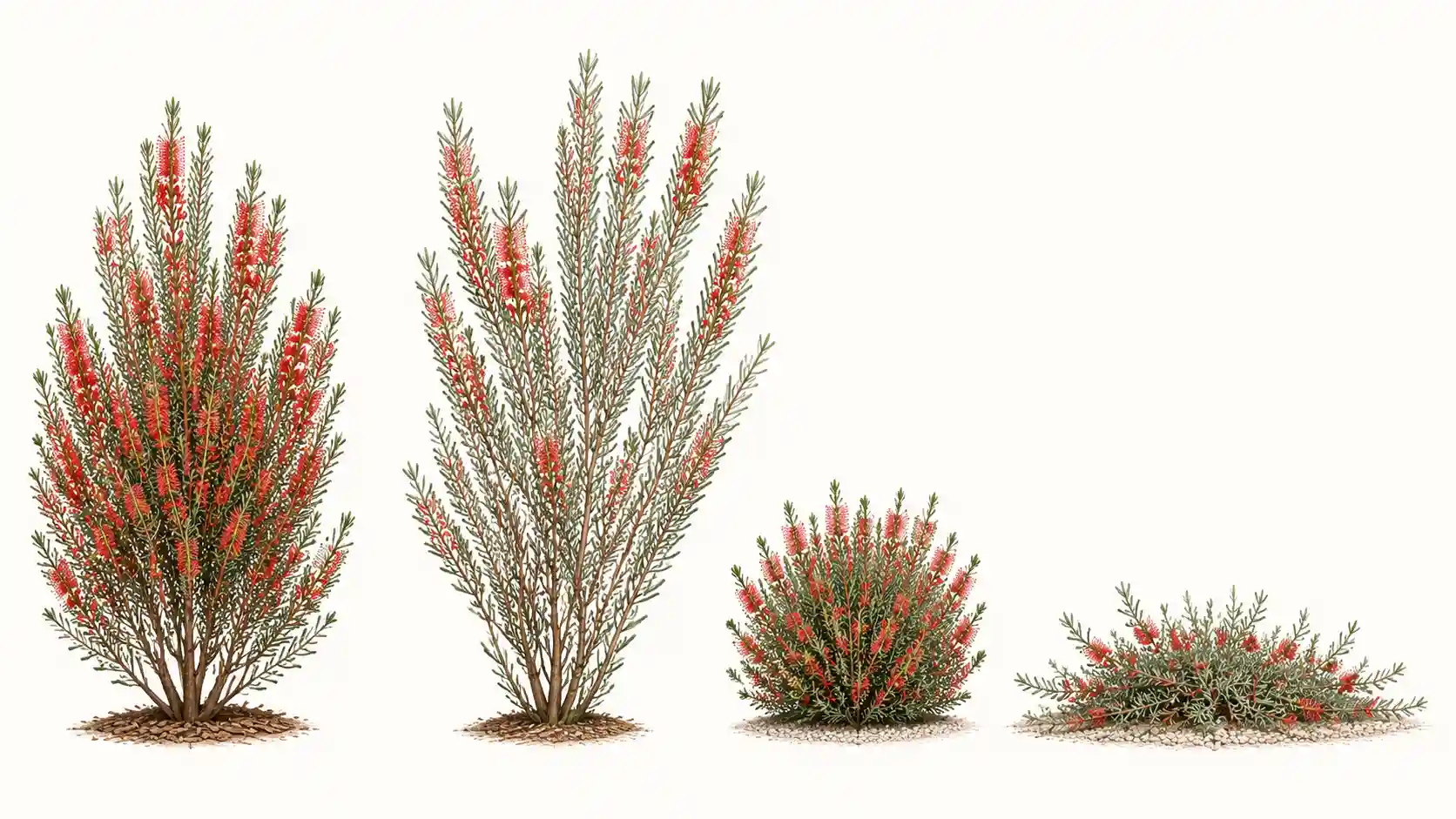
| Variety Name | Foliage Color | Flower Color | Growth Habit | Typical Use |
| Standard Form | Green-grey | Red | Upright shrub | Native gardens, hedging |
| Grey Form | Grey-green | Red | Taller, more open | Screening, wildlife gardens |
| Dwarf Form | Green | Red | Compact shrub | Small gardens, borders |
| Prostrate Form | Green-grey | Red | Groundcover spreading | Erosion control, slopes |
| Aurea Form | Green | Yellow | Upright to spreading | Ornamental feature planting |
Variation in form is common among Australian shrubs, similar to diversity seen in Grevillea Elegance and other ornamental natives.
Grey Form
The Calothamnus quadrifidus grey form features silvery-grey foliage and a more open growth habit. It can reach 2–4 meters in height under optimal conditions.
Dwarf Form
The dwarf form is a compact version suitable for smaller gardens. It maintains dense foliage and reduced height while still producing vibrant red flowers.
Prostrate Form
The prostrate form grows low to the ground and spreads horizontally, making it ideal for soil stabilization and groundcover applications.
Aurea (Yellow-Flowered) Form
The aurea form produces yellow flowers instead of red, offering a unique ornamental variation within the species.
Plant Size — Height and Width
Calothamnus quadrifidus size varies depending on the form and environmental conditions such as soil quality, sunlight, and pruning practices.
- Standard form: 1.5–2.5 meters tall
- Grey form: 2–4 meters tall in favorable conditions
- Dwarf form: 0.8–1.5 meters tall
- Prostrate form: ~0.8 meters tall, spreading up to 2 meters wide
Environmental factors such as full sun exposure and well-drained soils significantly influence final plant height and width. These size variations are typical among native shrubs also discussed in Dwarf Eucalyptus Trees Guide, where growth depends heavily on climate and pruning.
Growth Rate
Calothamnus quadrifidus has a moderate to fast growth rate once established. Growth is typically most active during spring and summer, while slowing in winter dormancy periods. Plants in well-drained soils with full sunlight grow significantly faster than those in shaded or compacted conditions.
Growth may slow in nutrient-poor or poorly drained soils, but the plant remains resilient even under low-fertility conditions. This moderate growth pattern is comparable to shrubs like Leptospermum Seclusion, which also responds strongly to sunlight and drainage.
Calothamnus quadrifidus Care Guide
Watering Requirements
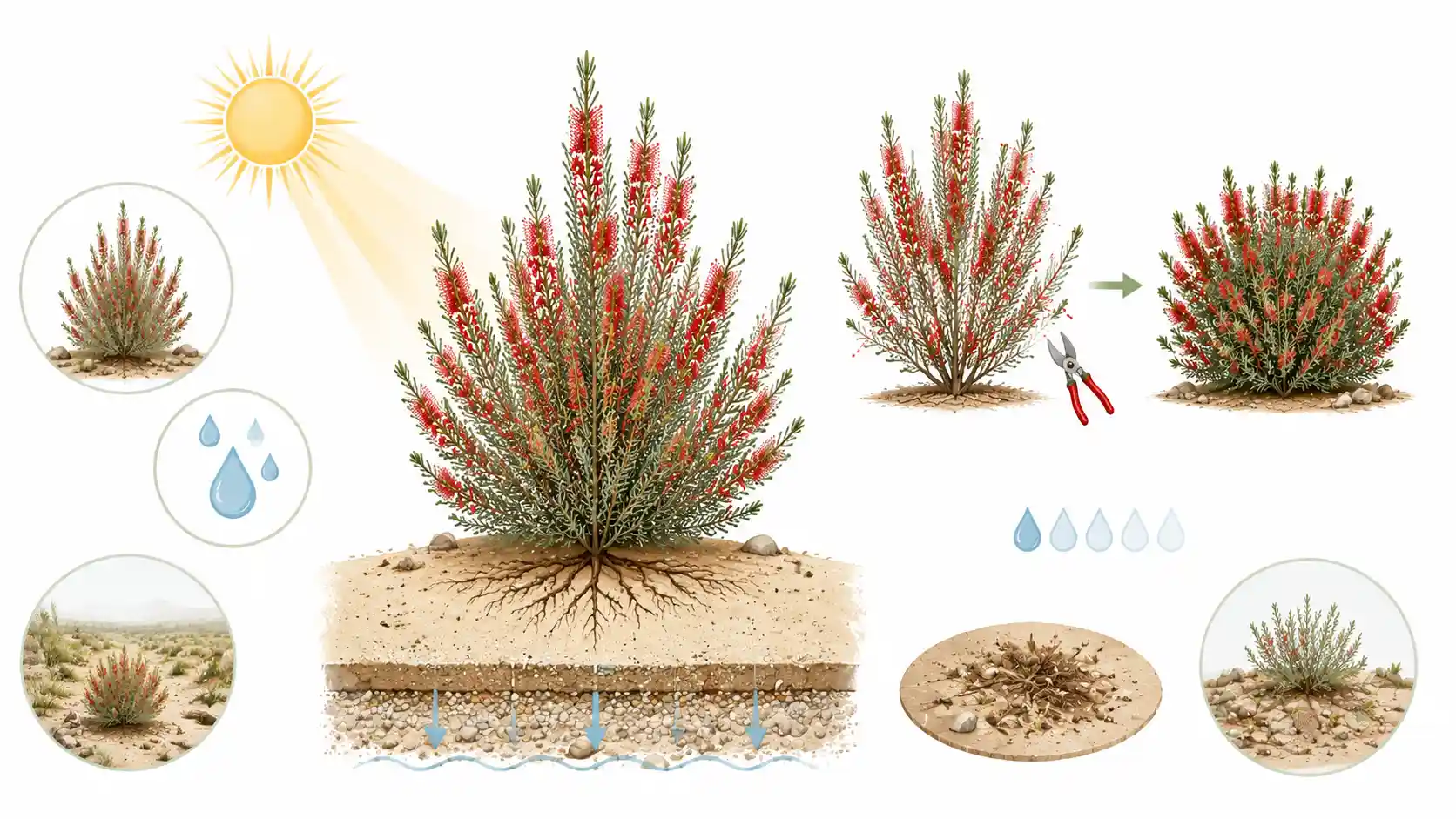
Young plants require regular watering until established, typically during the first 6–12 months. Once mature, Calothamnus quadrifidus is highly drought-tolerant and requires minimal irrigation.
Light Conditions
This species thrives in full sun but can tolerate partial shade. Full sunlight encourages denser flowering and stronger growth.
Soil Preferences
Prefers sandy or loamy, well-drained soils. It can tolerate clay soils if drainage is improved. Poor drainage can lead to root stress.
Fertilizing Guidance
Low-phosphorus fertilizers are essential, as the plant is sensitive to high phosphorus levels. Over-fertilizing can cause root damage and leaf discoloration.
Pruning Considerations
Light pruning after flowering encourages bushier growth and improves flowering density in the next season.
Climate and Frost Tolerance
Calothamnus quadrifidus is adapted to coastal and dry climates. It tolerates light frost but may suffer in prolonged freezing conditions.
Quick Care Snapshot:
- Water: Low once established
- Light: Full sun preferred
- Soil: Well-drained sandy or loamy
- Fertilizer: Low phosphorus only
- Pruning: Light post-flowering pruning
Similar drought-tolerant behavior is found in coastal species like Coastal Cushion Banksia, which thrives in sandy soils.
Common Problems With Calothamnus quadrifidus (and How to Fix Them)
Yellowing leaves: Often caused by phosphorus toxicity due to over-fertilization. Reduce fertilizer use and flush soil if necessary.
Root rot / poor growth: Usually results from overwatering or poorly drained soil. Improve drainage and reduce watering frequency.
Pest issues: Occasionally affected by scale insects or aphids. Treat with horticultural oil or insecticidal soap.
Sparse flowering / legginess: Caused by lack of pruning or insufficient sunlight. Increase sun exposure and prune after flowering.
Overwatering sensitivity is also seen in species like Correa Alba Prostrate, which prefers dry, well-drained conditions.
Beginner Mistakes and Practical Tips
- Overwatering mature plants reduces drought tolerance
- Using high-phosphorus fertilizers can damage roots
- Planting in heavy shade reduces flowering performance
- Confusing dwarf and standard forms leads to spacing issues
- Ignoring drainage is a major cause of plant failure
Calothamnus quadrifidus vs Callistemon: What’s the Difference?
| Feature | Calothamnus quadrifidus | Callistemon |
| Flower structure | One-sided clusters | Cylindrical bottlebrush |
| Foliage | Needle-like, fine | Broader leaves |
| Growth habit | Shrubby, variable forms | Upright shrubs/trees |
| Family | Myrtaceae | Myrtaceae |
| Ornamental use | Native landscaping | Decorative flowering gardens |
Calothamnus quadrifidus differs mainly in its one-sided flower arrangement, while Callistemon produces uniform cylindrical flower spikes.
Where Calothamnus quadrifidus Fits in the Garden
Calothamnus quadrifidus is widely used in wildlife-friendly gardens, native plant landscapes, hedging, and windbreaks. Its drought tolerance makes it suitable for coastal planting and erosion control areas. It also integrates well into broader categories such as landscaping plants, plant propagation projects, and plant troubleshooting studies due to its adaptability and resilience.
Conclusion
Calothamnus quadrifidus, or one-sided bottlebrush, is a resilient Australian native shrub valued for its distinctive flower structure, drought tolerance, and low maintenance requirements. With multiple forms ranging from dwarf to prostrate types, it adapts well to different garden designs. Its ability to thrive in dry, sunny environments makes it a reliable choice for sustainable landscaping.
FAQs
What is the common name for Calothamnus quadrifidus?
The common name is one-sided bottlebrush, referring to its unique flower arrangement along one side of the stem.
Why are Calothamnus quadrifidus flowers only on one side of the stem?
Flowers develop on one side due to the plant’s genetic growth pattern, creating a comb-like floral structure.
How big does Calothamnus quadrifidus grow?
It typically grows between 1.5 and 3 meters, depending on variety and growing conditions.
Is Calothamnus quadrifidus drought tolerant?
Yes, it is highly drought-tolerant once established due to its adaptation to Australian dry climates.
Why are my Calothamnus quadrifidus leaves turning yellow?
Yellowing is often caused by phosphorus sensitivity or over-fertilization.
What is the difference between the grey form and the standard form?
The grey form has silvery foliage and can grow taller and more open compared to the standard form.
Can Calothamnus quadrifidus be grown in pots or as a hedge?
Yes, dwarf forms are suitable for pots, while regular forms can be shaped into informal hedges.